


Demanding first night for Sydney Hobart
Published on December 24th, 2025
Strong southerlies and big ocean swell are shaping as the defining features of the opening stages of the 2025 Rolex Sydney Hobart Yacht Race which starts December 26. Given that the 628nm course is to the south, this equats to a demanding first night at sea.
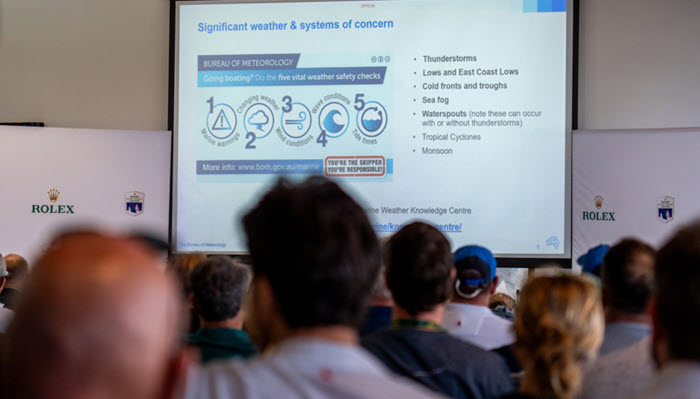
The Bureau of Meteorology (BOM) has warned crews to prepare for a sharp transition from Sydney Harbour sailing to full ocean conditions almost immediately after the start.
BOM meteorologist Edward Townsend-Medlock outlined a forecast dominated by a slow-moving high-pressure system sitting over Tasmania. While the system brings settled weather overall, its positioning puts the fleet on its eastern flank for the opening phase of the race — a scenario that delivers firm southerly winds and a long, mature swell rolling straight up the New South Wales coast.
At the start cannon, conditions inside Sydney Harbour are expected to be relatively orderly but brisk. Southerly winds in the 15–20 knot range will funnel through the harbor, enough to keep crews alert during the congested spinnaker start without creating the chaotic conditions seen in some recent editions.

However, Townsend-Medlock cautioned that the real challenge begins the moment yachts clear Sydney Heads in the 80th edition.
Once in open water, the southerly flow is forecast to strengthen to 20–25 knots, with higher gusts possible. Importantly, the wind will be aligned with a significant south to south-easterly swell of around 2-3 metres. While the official forecast refers to ‘significant wave height’, sailors were reminded that individual waves can reach close to double that height over a 24-hour period.
“That combination of strengthening winds and a mature swell from the south means it could get quite hairy quite quickly as boats exit the Heads,” Townsend-Medlock said, noting that hazardous surf warnings are likely to be issued for the NSW coast on race day.
The swell period, forecast at 9-11 seconds, indicates a well-developed ocean swell generated by weather systems far to the south. While longer-period swells are often more predictable, they also carry considerable energy — particularly when reinforced by fresh southerly winds on top.
The fleet will also be departing on a high tide, with the peak occurring shortly after 1:00pm. While this reduces some of the turbulence associated with ebb tides at the Heads, it does little to blunt the impact of the incoming ocean swell.
Inside the Harbor, a small north-easterly swell of around half a metre may also sneak through, adding a subtle but noticeable lumpiness for crews during the early maneuvers.
Weather-wise, the day itself is expected to be mostly fine, with some cloud and only a slight chance of showers developing later in the afternoon — a reminder that even benign skies can mask challenging sea states offshore.
For the first afternoon and evening, conditions are forecast to remain consistent along the NSW coast. Strong south to south/south-westerly winds of 20–25 knots are expected to extend well beyond Sydney, producing a relentless, physical first leg for crews settling into race mode.
The swell remains firmly in the 2-3 metre range during this period, with wind-driven waves stacking on top of the underlying ocean swell. This layering can create steep, awkward seas — particularly uncomfortable for boats pushing hard overnight.
Despite the challenging sailing, visibility and weather conditions are expected to be relatively benign, with only scattered showers and no thunderstorm activity forecast for the opening night.
“There’s nothing extreme in terms of storm systems,” Townsend-Medlock noted, “but it’s very much fresh to strong sailing early, and that’s what crews should be planning for.”
Relief is expected to arrive as the fleet pushes south through their first morning. As the high-pressure system drifts eastward, wind strengths are forecast to ease to around 10–20 knots, still from the south to south-west but noticeably lighter than the opening blast.
While the underlying southerly swell will persist, the reduction in wind is expected to lower overall wave heights to around 1-2 metres — a significant improvement in comfort and boat handling for crews.
By later on day two, wind strength becomes more variable depending on distance offshore. Boats closer to the coast are likely to find lighter conditions, while those further east may still encounter fresh southerlies on the edge of the high-pressure system.
For navigators and skippers, the forecast underscores the importance of early decision-making. A fast, clean exit from Sydney Heads will be critical, but so too will managing boats conservatively through the opening hours to avoid damage or fatigue.
The presence of strong southerly current eddies along the NSW south coast may also influence routing choices early, particularly where current, swell and wind oppose each other to create confused seas.
What is clear is that this year’s race will ask hard questions immediately.
The start may look spectacular from the Harbor, but beyond the Heads, crews face a genuine offshore test — one that will reward preparation, discipline and respect for the conditions long before the fleet ever reaches Bass Strait or Tasmania.
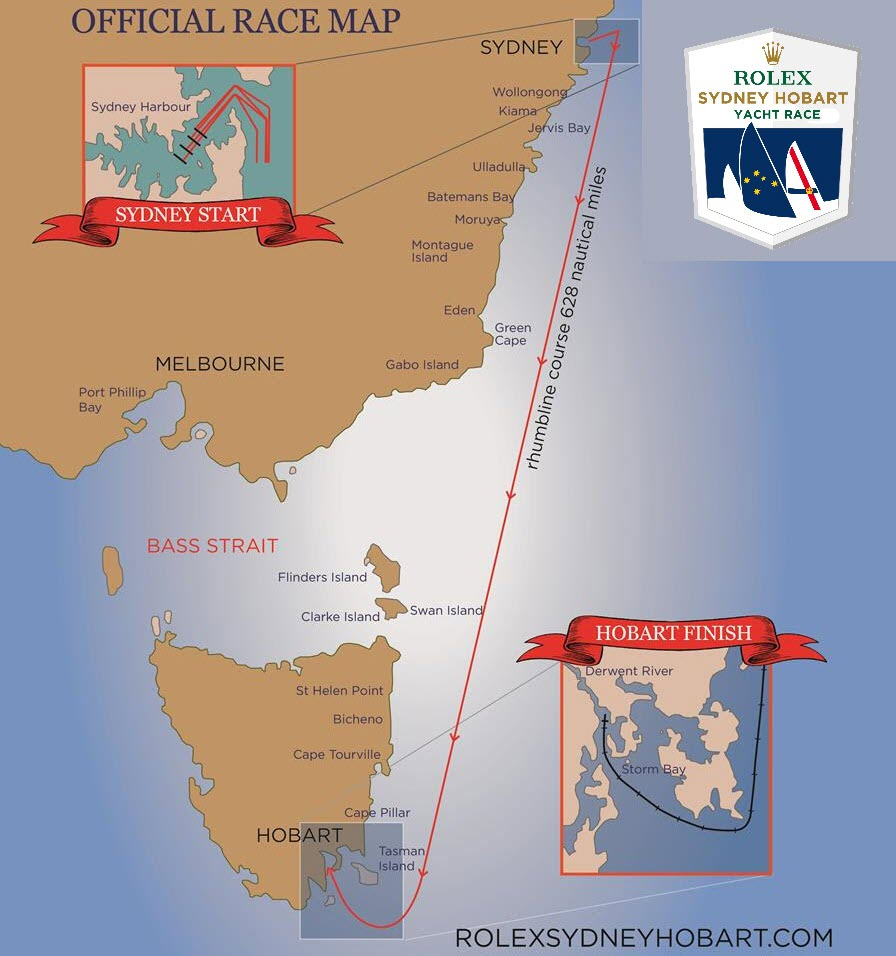
The 2025 Sydney Hobart Race extends 628-nautical miles from Sydney Harbour to Hobart, the state capital of Tasmania. The start on December 26 takes place in the heart of the Australian summer, with 142 entrants planning to take on the 80th edition.
Source: Steve Dettre/RSHYR

Related Posts
Thoughts on double handing →

When imbalance is the topic →
First woman to win Sydney Hobart Race →