

Managing health among big wallets
Published on August 26th, 2026
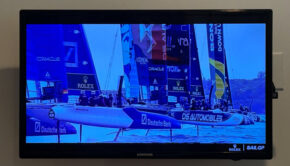
Watching the preview video for the Maxi Yacht Rolex Cup 2026, these are not your father’s boats. These are not dual-purpose boats that cross oceans on their own bottom. These racing machines use the most advanced equipment, and are sailed by the leading professionals in the sport.
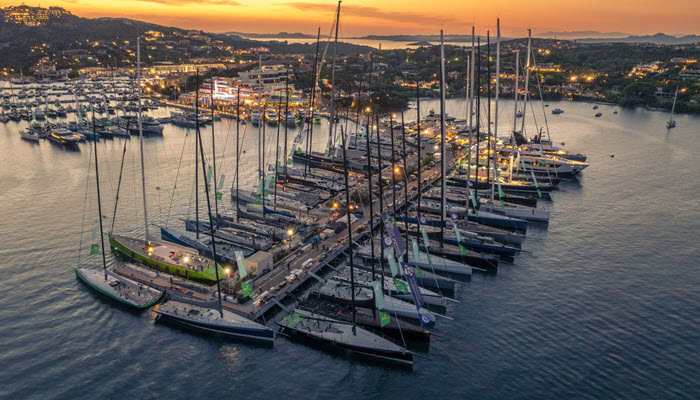
Of the 42 entrants to race September 6-12 in Porto Cervo, Italy, over half are 75+ feet and eight are at least 100 feet. According to Andrew McIrvine, Secretary General to the International Maxi Association (IMA), “Maxi racing is looking a lot healthier than some other areas of the sport.”
No small task with such big wallets.
Stability seems to be the key for this health. “The IMA Technical Office recently circulated a document confirming that no major changes are envisaged in the rating system, clearing the way to build new boats,” offered McIrvine.

Here’s the plan:
1. IMA is not considering any changes to the rating systems.
2. IMA is not seeing instability in the rating systems.
3. IMA is not planning to change any of the class splits.
“IMA is seeing one of the most stable periods in the past 35 years in maxi racing, with the fleet growing at unprecedented rates and events expanding,” said McIrvine. “The IMA will continue to act to maintain this encouraging environment.”
IMA maxi regattas are scored using the simple IRC system, with fixed TCCs, and have not been swayed by the emerging Forecast Time Correction Factor (FCT-F) which determines the optimal finish times based on weather forecasts.
Observed McIrvine, “The ORC classes in the Yacht Club Italiano’s Loro Piana Giraglia were relying on ‘predicted expected finishing times’ for each boat according to the weather forecast at the beginning of the race. And the outcome was entirely predictable.
“The weather models proving wildly inaccurate with more wind than expected for the larger boats which arrived in many cases substantially ahead of their routing while the opposite occurred for the smaller boats.
“Weather forecasting may be better than it used to be but to calculate – let alone try to predict – results in this way defies understanding.”
Even these captains of industry appreciate simple and stable.

Related Posts

Breaking down barriers to a sport →

Make participation easy and worthwhile →

Praising the diversity within sailing →