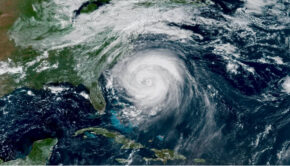



Historically quiet hurricane season
Published on September 10th, 2026
While the Pacific storm season has been active, with Hurricane Lowell recently causing significant damage in Hawaii, AccuWeather reports how the Atlantic basin is having a historically quiet season.
It’s been more than 100 years since the Atlantic basin failed to produce a hurricane during the Atlantic hurricane season, and as September 10 marks the official climatological peak of the season, the Atlantic still has not formed a hurricane this year.
AccuWeather expert meteorologists believe there is a low probability that one forms before the end of the month.
“The possibility that the Atlantic could go through its entire busiest month without a hurricane is what makes this season truly exceptional,” said AccuWeather Lead Hurricane Expert Alex DaSilva. “Powerful El Niño conditions continue to generate disruptive wind shear across the basin, and we do not see a meaningful change in that pattern through the end of September.”

The latest first hurricane during the satellite era (beginning in 1966) formed on September 11 in both 2002 and 2013. If a hurricane forms this year, it will set a new record.
Twice in recorded history has the basin finished a season without producing a single hurricane, in 1907 and 1914, but it’s never happened during the more thorough satellite era, where technology began allowing meteorologists to better spot and track storms away from land.
This year, five named storms have formed, but persistent wind shear, dry air, and repeated plumes of Saharan dust have prevented any from reaching hurricane strength.
The last Atlantic season without a September hurricane came in 1994. Tropical Storms Debby and Ernesto formed that September, but neither reached hurricane strength. However, 1994 had already produced Hurricane Chris in August, and hurricanes Florence and Gordon later formed in November, bringing the season total to three.
The Atlantic hurricane season continues through November 30. If a hurricane does not develop in September, any opportunity for the season’s first hurricane would be in October or November, when tropical activity typically begins to decline. Since 1966, only about 24 percent of all hurricanes have historically developed after September; that number shrinks to 19 percent in El Niño years.
“Typically one of the biggest things deterring tropical development in the Atlantic late in the year is increasing wind shear across the basin,” reports AccuWeather expert meteorologist Nicholas Arman.
“The jet stream becomes much more active, which leads to large dips in the jet stream further south across the basin, increasing wind shear. Early season cold fronts also tend to cool down the waters, along with decreasing solar energy as the sun shifts into the southern hemisphere. These make it harder for storms to develop and grow in the main development region.”
This year, the increasing El Niño-driven wind shear is expected to make the Atlantic even less conducive for development through the remainder of the season. Tropical storms and tropical rainstorms can still form and produce flooding rainfall, damaging wind gusts, rough surf and significant disruptions, even if they do not reach hurricane strength.


Related Posts
Storms are getting stranger →
Significant storm suspends offshore race →

Fall forecast will be driven by El Niño →