


Detecting hazards on the water
Published on October 26th, 2026
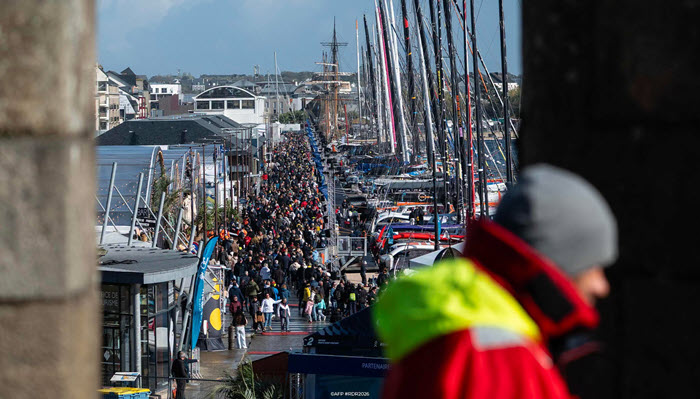
On November 1, some of the world’s leading offshore sailors will set off from Saint-Malo in France for Pointe-à-Pitre in Guadeloupe for the 13th Route du Rhum. Held every four years, the 115 entrants make this the biggest solo transatlantic race.
But with hazards along the 3,542 nm course, more than 20 boats across the 100-foot Ultim and 60-foot IMOCA fleets will be equipped with SEA.AI, an AI-powered machine vision system designed to detect hazards on the water that conventional navigation systems and human eyes may miss.
At high speeds and limited visibility, particularly at night, an undetected floating object or an unlit vessel can turn a race into a dangerous situation within seconds. Combining optical and thermal cameras with artificial intelligence, SEA.AI continuously analyses the sea surface, detecting and classifying potential hazards day and night.
“We were on the delivery trip back from a race, a few days after leaving the Caribbean,” said Armel Le Cléac’h, skipper of Maxi Banque Populaire XI (Ultim). “SEA.AI sounded the alarm, and it was a life raft that had broken loose from a cargo ship and was drifting in the middle of nowhere. It passed within a few dozen meters of the boat. Without SEA.AI, we could have hit it.”


Related Posts

Avoiding collision during Vendée Globe →

Collisions at sea with marine mammals →

Replacing responsibility with technology →
