
Building a better youth sailing culture
Published on October 28th, 2026
Junior sailing in the USA got “soccerized” in the 1980s, using a system of age-based events and boats to help corral the kiddos. While this created structure and boosted participation at some levels, it impacted involvement down the road. Chris Bulger offers his view of the landscape:
Over the last 30 years, US youth dinghy sailing evolved from predominantly a lesson in fun and self-reliance into a tightly controlled optimization exercise. At the same time – US adult dinghy sailing shrank dramatically as the sport’s focus shifted to those with the biggest budgets.
But rather than dissect how we got here – let’s examine a wildly successful contrary example from another country.
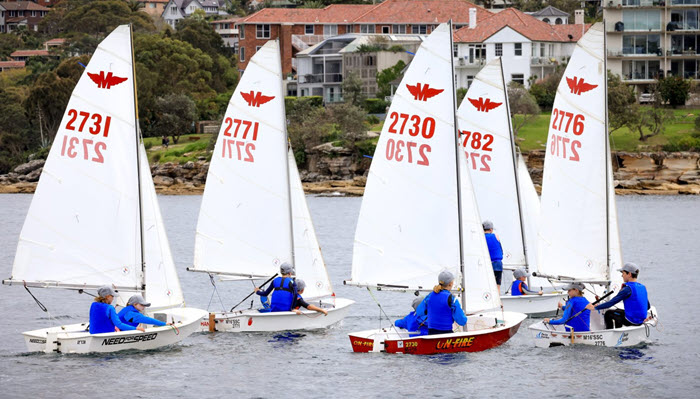
I will posit that the Manly Skiff Club in Australia is the premiere sailing club on the planet – for developing both lifelong sailors and gold medalists. Studying this club can illuminate the structural changes we need to make if we want a youth movement that can actually grow the sport.
As evidence – their adult skiff – the 3-handed Manly 16 – regularly turns out over 40 boats for a Saturday race with 120 adults sailing a boat that’s every bit the high-performance challenge of a 49er.
You will find multiple Gold Medalists in the middle of the pack and female skippers on the podium. Behind the 120+ adult sailors are many volunteers and sponsors. All of this adult activity creates an incredible pull for youth sailors and a legion of volunteer mentors.
And – Manly takes youth development very seriously. Starting young sailors in their 2-handed Manly Junior. No singlehanders please – they believe that social engagement is critical to creating lifelong sailors.
Anecdotally – I know way too many American kids who were superb Opti sailors that walked away from the sport without looking back. They weren’t leaving best friends behind because they competed alone and were surrounded by adults who were too focused on “nutrition and conditioning” to coach the kids in socializing.
After the Manly Junior, the kids step up to 13s which is a high-performance 2-person skiff (fun-fun-fun). The 13s race on the same course as the adult 16s. The coaching comes from all directions – peers, older kids, adults. Most of the support also can be described as family and friends, and not hired guns brought in to help them beat the other kids and get into college.
There are many more great “take-aways” from Manly, like how they use sponsorships to make sailing very fancy boats affordable there by expanding the population who can play. The list goes on. But it all starts with rebuilding US adult dinghy sailing – without that, our youth programs continue to be a road nowhere.
How to grow adult dinghy sailing – it’s not impossible – but will take more leadership at the club level.
For years, US sailing focus has shifted towards sailors who spend the most – big budget programs have garnered the majority of the media, race committees, and club attention. If we want to re-grow the sport – we need to put some of these resources back towards local dinghy fleets and hosting dinghy regattas.
Want to have a better youth sailing culture to keep them in the sport? Rebuild the pathway, one centerboarder at a time.

Related Posts
From triathlon training to youth sailing →
Why nobody teaches kids to sail anymore →
Bringing the sport to the people →