Mapping future of Olympic Sailing
Published on November 18th, 2026
The International Olympic Committee (IOC) will confirm the Brisbane 2032 Olympic sport program in April 2027, and Sailing hopes to be on it. However, a new strategy being used for selection, which focuses on the event and not the sport, has got attendees spinning at the 2026 World Sailing Annual Conference on November 16-21 in Qingdao, China.
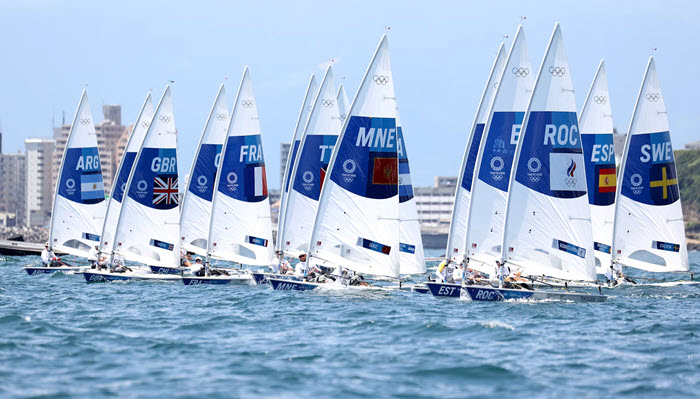
There are ten Sailing disciplines on the Los Angeles 2028 sport program, and while World Sailing would prefer not to lose any, that may be needed to avoid losing all of them. Among the 36 sports for LA28, Sailing’s 10 medal events place it in the upper third of all sports. Losing half of the Sailing events would put it mid-field.
This report by Dan Ibsen of Danish publication Bådmagasinet provides additional context:
The IOC’s new “Fit for the Future” strategy presents Sailing with a critical challenge. But is World Sailing prepared to rethink its Olympic product—or will vested interests and class politics once again stand in the way?

World Sailing must address a series of proposals in China to adjust Olympic sailing competitions. However, the task at hand is far greater than merely tweaking medal events or boat classes. The sailing community should be acutely aware of the following:
Olympic status is not a reward for the sport’s history. It is a position that must be earned – and re-earned going forward.
This should be the starting point for any discussion regarding sailing’s Olympic future. Because the question is no longer just about which classes and disciplines should be included in the Olympic program.
It is about whether World Sailing can succeed in developing a cohesive Olympic product that meets the requirements and expectations set by the IOC for the Olympic Games of the future.
A position that cannot be taken for granted
The Olympic Games serve as sailing’s most important international showcase. It is here that the sport gains global visibility, reaches new audiences, and has the opportunity to attract young people, sponsors, and investment.
Furthermore, Olympic status carries significant weight well beyond the Games themselves.
It helps underpin the finances and development of the entire sailing ecosystem – from World Sailing and national federations down to local clubs, talent development programs, elite training centers, coaches, and facilities. In many countries, investments in the sport by National Olympic Committees and public authorities are also closely linked to its Olympic status.
Losing this status would therefore represent a serious setback for far more than just the international elite.
At the same time, the sport of sailing faces well-known challenges. In many traditional sailing nations, it has become increasingly difficult to attract and retain young people. Sailing requires time, access to facilities, and often significant financial resources—especially at the talent and elite levels. Competition from other sports and leisure activities is fierce.
Consequently, the sport cannot base its Olympic future on traditions, history, or the argument that the sport has always been part of the Olympic Games.
More than just a discussion about classes
The IOC’s “Fit for the Future” strategy serves as a clear signal that Olympic sports must continuously demonstrate their relevance. The Games need to be attractive to audiences, television viewers, host cities, and future generations. Simultaneously, the scale, costs, and organizational complexity must be kept under control.
IOC Sports Director Pierre Ducrey provided an update at the World Sailing Council meeting regarding the IOC’s three core assessment areas: global appeal, costs and complexity, and the representation of the best athletes. According to this framework, global appeal carries a 60 percent weighting, while the other two areas each account for 20 percent.
This represents a significant shift in perspective. It is no longer sufficient for a discipline to possess a strong sporting tradition or enjoy support from a number of national federations. It must also be capable of attracting an audience, functioning effectively as an Olympic competition, and contributing to an overall Olympic product that is appealing to both viewers and host cities.
Therefore, it is not sufficient for World Sailing to focus solely on replacing individual disciplines. The current discussion regarding, for instance, kiteboarding, wingfoiling, and mixed-gender boat classes is relevant, but it must not overshadow the fundamental question: Is the overall way in which we present and conduct Olympic sailing the right one?
The same political challenge for 30 years
For more than 30 years, discussions regarding the Olympic program have been characterized by national interests, one design class politics, and consideration for established communities.
It is understandable that federations and classes fight for their own interests. However, the problem arises when these interests come to dominate decision-making, making it difficult to look beyond the immediate and consider the future of the sport as a whole.
For many years, development has largely consisted of adjustments: some classes have been added, others have disappeared, and competition formats have been altered. Fundamentally, however, we have often attempted to adapt the existing product rather than asking the more critical question:
What should Olympic sailing look like to remain relevant 10 or 20 years from now?
It takes courage to challenge established structures and interests. It also requires World Sailing to prioritize the big picture over the wishes of individual classes and national federations.
It is time to think bigger
World Sailing should therefore use the IOC’s strategy as an opportunity for a fundamental review of the entire Olympic sailing product.
This involves, among other things, how to make competitions more understandable and attractive to the audience, how to strengthen TV and digital formats, and how to make the execution of events less complex and costly. It is also about ensuring broad international participation and developing disciplines that can spark interest among new generations.
This does not necessarily mean that all existing classes must be replaced. However, no Class should be considered untouchable if the overall Olympic strategy points in a different direction.
The crucial point is that decisions must be based on what best secures the Olympic future of sailing—not on who holds the strongest political position within the organization.
It is absolutely vital that World Sailing shifts its priorities. Securing the Olympic future of the sport of sailing is more important than securing the Olympic future of individual classes.
Paul Elvstrøm once said: ”The most conservative forces in sailing is the International Classes. Therefore they should be kept away from the decision making process.”
This may sound obvious, but it is not always how decisions in international sailing have been made. If World Sailing continues to allow special interests and internal compromises to dictate development, the organization risks reacting too late to the requirements set by the IOC. In that case, the greatest threat to sailing’s Olympic status might not come from competing sports, but rather from our own inability to change.
Sailing has a great deal to offer the Olympic Games. But knowing this ourselves is not enough. We must also be able to convince the rest of the world—and the IOC—that the sport has a clear place in the Olympic Games of the future.
Los Angeles 2028 Olympic Sailing Program (July 16-28):
First Week – July 16-20
Men’s Kiteboard – Formula Kite Class – Long Beach, CA
Women’s Kiteboard – Formula Kite Class – Long Beach, CA
Men’s Windsurfing – iQFOiL – Long Beach, CA
Women’s Windsurfing – iQFOiL – Long Beach, CA
Second Week – July 23-28
Men’s One Person Dinghy – ILCA 7 – Los Angeles, CA
Women’s One Person Dinghy – ILCA 6 – Los Angeles, CA
Mixed Two Person Dinghy – 470 – Los Angeles, CA
Men’s Skiff – 49er – Los Angeles, CA
Women’s Skiff – 49erFX – Los Angeles, CA
Mixed Multihull – Nacra 17 – Los Angeles, CA
For more details, click here.

Related Posts
Winners for 2026 World Sailing Awards →

What will World Sailing decide in 2026? →
World Sailing needs to do some governing →