
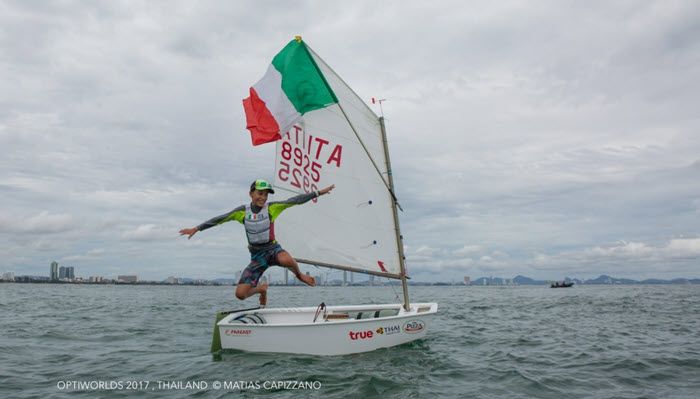
Who is junior sailing actually for?
Published on November 21st, 2026
Competition for young people is not new, but the heightened level of coaching and training has changed the landscape. Dom Barnes, a coaching professional in the United Kingdom, asks the questions that parents and junior sailing programs should be asking:
Who is junior sailing actually for? The children in the boats, or the system trying to produce our next Olympic champions?
I think that’s a question we should be asking, because somewhere along the way we’ve developed an enormously sophisticated structure for identifying talented young sailors, putting them through squads, coaching programs and national championships, and measuring their progress against other children.
And I’m not entirely convinced we’re measuring the right things.

A review published in Sports Medicine, examining 13,392 athletes across Olympic sports, found that junior performance explained just 2.2% of the variation in senior performance. The younger the athletes, the weaker the relationship.
Two point two per cent.
Yet we invest enormous amounts of time, money, and effort identifying the best sailors at fourteen, when differences in physical maturity, experience, and parental support can have such a significant influence on results.
Now, I absolutely believe we should support talented youngsters who want to compete internationally. We need an Olympic pathway, and those with the ambition and ability to succeed deserve every opportunity.
But what about everybody else?
The youngster who loves club racing but isn’t interested in travelling around the country every weekend. The mid-fleet sailor who’s improving steadily but isn’t getting selected for squads. Or, the child who simply enjoys competing against their friends without every result being analyzed as a measure of future potential.
Are they less successful because they’re not moving up the pyramid?
I’d argue that junior sailing should be about developing young people who enjoy racing, understand competition, learn to win and lose, and want to stay involved in our sport for the rest of their lives.
Some will become Olympic champions. Most won’t.
And that’s absolutely fine.
I’d rather see a hundred youngsters still racing at 30 years of age than one Olympic champion and 99 who gave up at 16.
So how should we judge junior sailing: by the champions it produces, or by the sailors still racing twenty years later?

Related Posts

Promotion is everyone’s responsibility →

Women are all in on match racing →

Building a better youth sailing culture →