

Why sail trimming has changed
Published on April 28th, 2026
Before modern yacht design embraced non-overlapping headsails, a quiver of different sized sails was needed to cover the wind range. Offshore coach Stuart Greenfield reflects back on that era:
It was the summer of 1987. I was the tactician on Giant Panda, a Two Ton Admiral’s Cup boat designed by Hugh Welbourn.
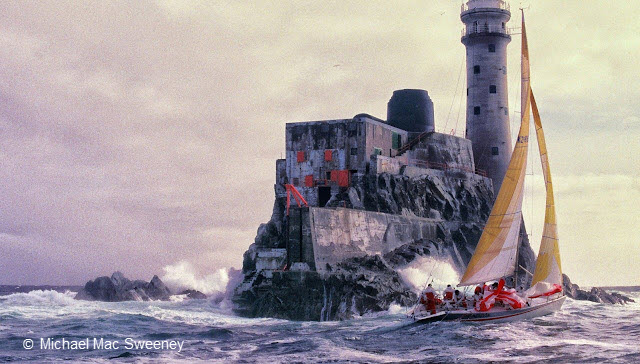
This was the start of the RORC Fastnet Race.
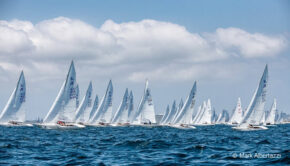
We had a midday start off the Squadron Line in the Solent, just off Cowes. The wind was a light south-westerly, around 8 knots. We started with our No.1 genoa, a large 150% overlapping sail, very much the fashion at the time, alongside a full mainsail. With the hydraulic backstay fully wound on, we were set up for a tight beat towards Cowes Green, staying in the shallower water where the last of the flood tide was weakest so gave a slight advantage over those in deeper water or starting at the North end of the line.

This was typical Fastnet start geometry in those days, boats pushing into the inshore shallows just before the tide turned favorable.
As we approached the Green on starboard tack, the depth dropped away quickly. We called for water and prepared to tack out into slightly deeper water. With 30 or 40 other Class 2 boats doing exactly the same thing, it was hectic. – Full report

Related Posts
Fifty tips for a boat to survive winter →

If you see this on a sailboat, walk away →

Breaking down barriers to a sport →