


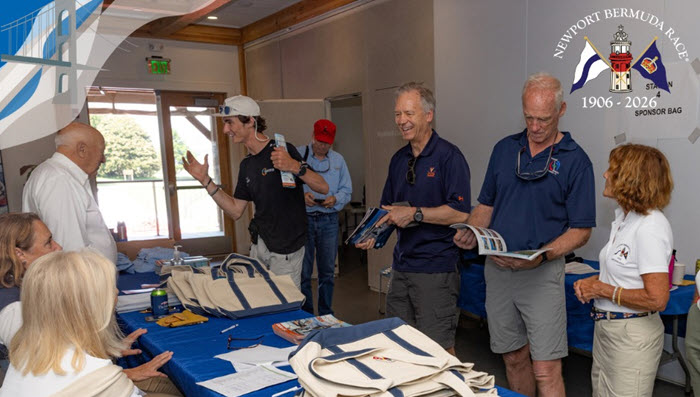
New inspection Newport Bermuda Race
Published on September 12th, 2025
The biennial Newport Bermuda Race in 2026 will be its 120th anniversary and also the 100th anniversary of the Cruising Club of America’s partnership with the Royal Bermuda Yacht Club in co-organizing the 636 nm course.
For the 54th edition, the race will now include a mandatory Keel and Rudder Inspection. All sailors are encouraged to review the recommendations in the technical report on the sinkings in the 2024 race. One recommendation is the periodic removal of the rudder which may require close coordination with your boatyard.
What the Inspection Involves
An “appropriately qualified person” must complete both an internal (in-water is acceptable) and external (out-of-water) structural inspection of each boat by the deadline of June 5th. The goal of the inspection is to assess the condition of the rudder, keel, and keel structure, and report findings to the Owner, who is responsible for any necessary repairs. For the Inspection Procedure and Form, click here.
What to inspect:
• High-load areas: Keel attachment points, keel floors, steering systems, and rudders. Inspect all prior repairs, especially after groundings.

• Internal inspection: Check backing plates, keel bolts, sump area, and keel floors for cracks, weakness, or de-lamination. Inspect keel bolt nuts and holes for corrosion or “ovaling.” For lead keels, bolts may need retightening to ISO standards.
• External inspection: Look for stress cracks or movement at the keel/hull interface. Sand back paint if needed to assess cracks. Perform a keel tip deflection test to confirm stability. Watch for gelcoat cracks, blisters, or signs of separation in high-stress areas.
• Rudder and steering: Inspect rudder shaft, blade, bearings, straps, and gudgeons for cracks or corrosion. Conduct a rudder tip deflection test to spot excessive movement. Confirm loads are supported by the hull structure, not just bearing bolts.
• Lifting/swing keels: Inspect pins, cylinders, and supporting structures for cracks or corrosion.
Bottom Line:
This new inspection requirement is about prevention. A careful check now can save your boat—and lives—later. For questions, contact Jon Burt: [email protected]
Source: NBR

Related Posts
What to do when answering a Mayday →

Review complete on Bermuda Race snafu →
Enthusiasm high for forecast scoring →