

Suffering for short moments of great fun
Published on June 29th, 2026
Per Roman
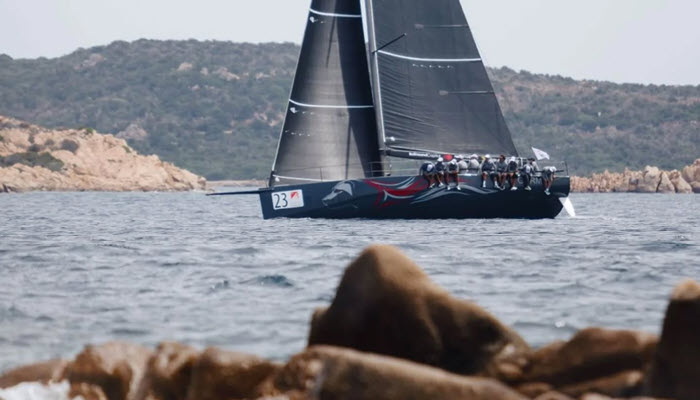
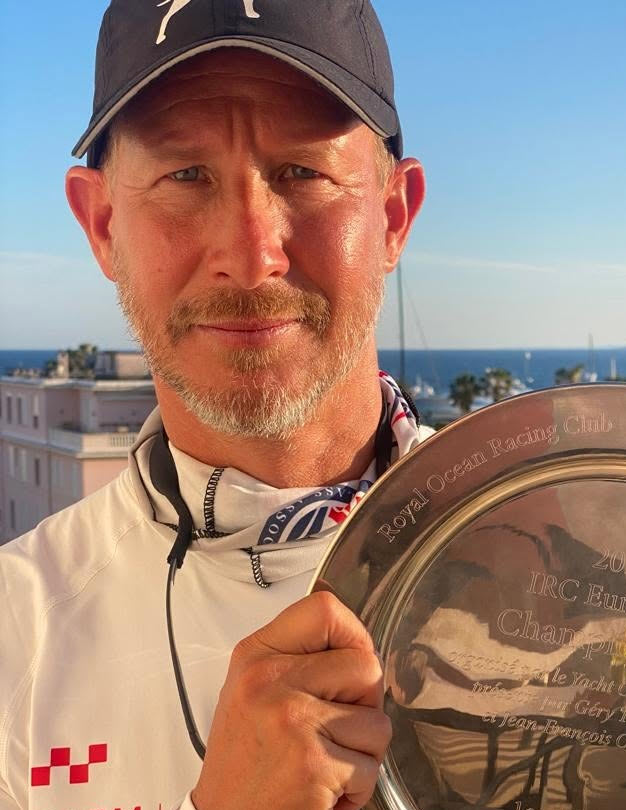
After finishing sixth in the 2026 ORC World Championship, Per Roman’s GP42 Garm42 was on the winning team for the 2026 Sardinia Cup. A tech investor since the 1990s, he shares the parallels with his professional sailing operation:
Why did sailing become your sport of choice, and what are the parallels between offshore racing and venture investing?
I was lucky enough to grow up with sailing. My father was a devoted sailor, and living on a sailboat between the ages of five and seven, I was able to explore Europe with my parents. Then my father went into offshore racing in the 52-foot circuit, mainly as a navigator; I think that seeing him with all these legendary sailors meant that it was always going to be my passion from the outset.
Racing in any sense, and venture investing have huge parallels. First you have to establish a really top-level team. Every part of the team is critical to its success, and that’s very similar to when you’re building a great company.
On the GARM42 we are eleven, while on the GARM J70s we are four; in that dynamic with relatively few in a team, everyone has to be their best, and you’re never stronger than your weakest link.
It is also important to have great partners supporting you. For example, at GARM we have the privilege of being supported by Multiverse Computing, Bullhound, Bigdata.com, and ConnexAI. Knowing that you have the backing of partners that you can rely on is key for your confidence, and this is the same in the venture world.
What are your views on decision-making under pressure, risk management, and leadership in extreme environments?
The ability to make the right decisions under pressure comes with experience. The more experience you have of the environment you’re operating in, whether that be stock market crises or bad weather, the calmer you can be when facing pressure.
If you under-factor risk, you aren’t winning in racing or investing. You have to know when to throttle down and play it safe, but also when to go full-throttle. And while this is a key responsibility of the skipper, it is also their responsibility to listen very carefully to the team.
For example, when we won the Sardinia Cup, we decided to go full throttle. The heavy weather was good for us when fighting two faster boats, so we knew the conditions were right to take that risk. It’s the same in investing, when you have conviction, you have to go after it.
In my experience, the key with leadership is to make sure that you surround yourself with really competent people, sometimes even more competent than yourself as the leader. Then, when you encounter high pressure situations, you get high value responses and trusted analysis from people that don’t deliberate too long or make mistakes.
What has professional sailing taught you about building high-performing teams?
Both in racing and investing, my job is to try to select a core team, and then trust them to build out the rest of the crew. I strongly believe in delegation, letting that core bring in the experts that work well with them. If you can pick a few people and trust them, it’s easier to be confident in the performance of your team.
What are the ways in which elite founders and elite athletes often share the same mindset traits?
The ability to stay very focused and disciplined is one that every elite founder or athlete must have. This mentality, stemming from an overarching need to succeed, allows them to say no to all the noise. Whether it be family commitments, social lives, or anything else, being elite comes with a lot of sacrifice, but for those who thrive at that level, it doesn’t feel like a loss.
After we won the Sardinia Cup, the two teams were celebrating and relaxing a bit at the prize ceremony, when my tactician started telling me about how we could be faster upwind for the next race. It’s all about the process, and doing things, rather than the celebrations and victories.
What are your views on the psychology of endurance, resilience, and competition?
I think it’s probably related to personality traits. Whether racing or building companies, it is mainly an endeavor of suffering with short moments of great fun.
Driving a boat upwind, or dealing with growth problems internally is always quite agonizing, though it can look great from the outside. It takes a certain type of individual to feel a form of satisfaction in that.
When facing setbacks, most high performers just want to go again, they know and believe they can do better, and they want to show that as soon as possible.

Related Posts

Breaking down barriers to a sport →
Two key variables for a good start →
Laying the laylines →